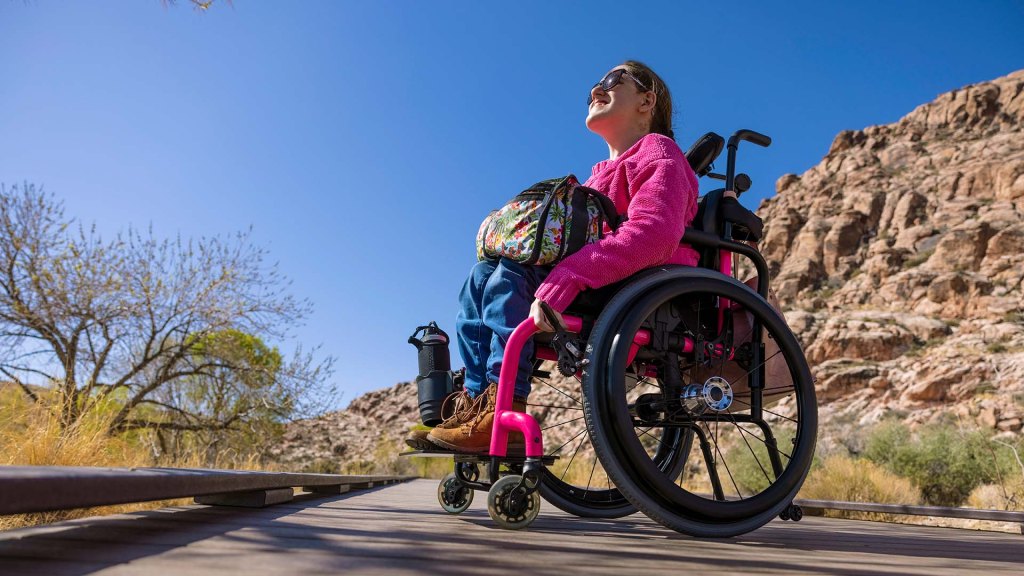

They say that it’s a small world. And in a way, it is an undeniable truth. But no matter how small it gets metaphorically, it is still a bigger marble than the average human will be able to explore. There is a good chance there are places you haven’t been and experiences you haven’t had. That’s where travel comes in. By all means, do that, be there, and get the t-shirt.
While a great idea in theory, leisure travel can be quite a challenge for people with disabilities. The potential pitfalls are massive. Your situation can become even more difficult if you are traveling to a place where you native tongue is not the one natively spoken in the place you wish to visit. It is considerably easier for a sighted person to cross the language barrier than it is for a blind person. When it comes to disabilities, visual impairment is just the beginning.
If you also have mobility challenges, you will find some places nearly impossible to explore due to the natural terrain, architectural choices, and historical preservation. Don’t expect that fantastic castle you heard so much about to have been renovated with wheelchair ramps for the sake of tourists. Old structures were not necessarily built with accessibility in mind. Other places will have you doing a lot more walking than usual. Public transportation is not really a priority in places that were built with pedestrians in mind.
Despite these and other challenges, there are things the disabled traveler can do to ensure they have a great experience as they seek out new experiences and boldly go. Here are four that will help ensure your travel adventures produce pleasant memories:
1. PICK YOUR DESTINATION WISELY
There is a fine line between boldly going where angels dance and foolishly going where angels fear to tread. One need not be disabled to fall victim of their own pride and since of invulnerability. There really are some parts of the world that should remain unexplored by all the professionals. Not to worry. There are plenty of amazing places that are known for their wheelchair accessibility. You might try Barcelona. This, from Lonely Planet:
WITH THE NATIONAL TOURISM AUTHORITY AND CATALONIA IN PARTICULAR PUSHING ACCESSIBLE TRAVEL, IT’S NO SURPRISE THAT WHEELCHAIR USERS HAVE BEEN FLOCKING TO BARCELONA. WITH 80% OF THE METRO STATIONS AND 100% OF BUSES WHEELCHAIR-ACCESSIBLE, AS WELL AS A RELATIVELY FLAT AND COBBLESTONE-FREE OLD CITY, GETTING AROUND IS A BREEZE.
If you want to keep your explorations closer to home, consider San Diego. It is one of America’s greatest cities. They have world-class beaches and even better, the beaches are wheelchair accessible. If your wheelchair isn’t up to it, they have some especially for sand. They even have motorized wheelchairs that will carve through the sand like a tank. In San Diego, accessibility is a high priority. You will not be left out of the fun.
2. BE SPECIFIC ABOUT SPECIAL NEEDS
It seems obvious but it is surprising how many people with special needs forget to call ahead and give their hosts a chance to prepare accommodations. It might be a sad commentary that one would need to call ahead to make sure the hotel has proper access to the dining room. But that is where we are right now. People who don’t frequently have disabled clients will have no idea how to accommodate them in the moment.
It is better for you and for them that you call ahead and be clear about your special needs. Don’t just tell them that you are visually impaired. They have no idea what that means or how you need to be served. Give them a chance to do the right thing and many of them will happily rise to the occasion. Lots of restaurants have braille menus but have no idea where they are when you arrive and ask for one. With a little prep, they will have a chance to assist you. Remember, when calling ahead, be very specific about your special needs and the accommodations you need. Prior preparation can make or break the trip.
3. MAKE A DETAILED ITINERARY
Spontaneity is not all it is cracked up to be. Wild adventures have their rewards, but they also have pitfalls. Some can be rather consequential. Rather than court disaster, plan your itinerary in advance so that you have your plan of action mapped out with as much detail as possible.
One benefit to planning an itinerary is safety. There are places that are not tourist safe. Some make a business out of preying on tourists who are alone, inattentive, or disabled. Exploitation is their business and business is good. Don’t make it easy for them by traveling too far from the beaten path, or at least a path that you have vetted ahead of time.
It will be worth spending a little extra to hire a trusted tour guide who can help assure that your trip is adventurous, enjoyable, and safe. I have never regretted money spent on a tour guide and neither will you. Make a human guide a part of your planning and a fun time is sure to follow.
4. DON’T FULLY TRUST ASSISTIVE TECH
One day, assistive technology will be just as reliable in real life as it is in the movies. But that day has not yet arrived. Sure, that translation app did just fine with one or two tries at home. But don’t plan your entire vacation around a translation app. As good as they are, there is no translation app that will make the cut when you are in a place that is entirely unfamiliar.
There are also quality services such as Be My Eyes. You might have a lot of success with it at home. But you will need a reliable wireless connection when you are traversing the streets of parts unknown. Even if the app is perfect, it means nothing without good cell service. The same is true for GPS. Navigation with GPS is spectacular until you find yourself in a place with no signal. That’s when you realize you should have downloaded maps for your various destinations. By the way, that is just one more reason to plan your itinerary.
Have you heard that Apple Pay and other such services are everywhere? That assurance will not even buy you a cup of soup when you find yourself in a village that never heard of Apple Pay and will only take cash. Did you not bring a stash of cash with you? Now you have to find an ATM. Enjoy those fees. You don’t want to have to rely on having a friend wire you money. Things get pretty hairy at that stage of the game.
The point is there is no assistive tech that is totally reliable. You need a backup plan if things go awry. Tech failures have ruined many a trip for people without disabilities. It is that much worse when you don’t have all your senses as backup.
When it comes to tech, get the biggest cell bundle you can afford so that you don’t run out of data service when you need it the most. Bring batteries and more batteries. Bring a power bank. Don’t just grab a charging cable. Grab two. Be sure you have a friend who has your well-planned itinerary and can keep tabs on you just in case. Expect some part of plan A to fail miserably. Be is for backup. Make sure that plan is as carefully considered as the first one.
Travel is one of the best things you can do for yourself. No disability should ever stand in the way of that. Make sure it doesn’t by choosing your destination wisely, making your special needs known in advance, creating a detailed itinerary, and having a backup plan in case your technology also decides to take a vacation.
David Johnson